Downloads only. Physical CD not available.
|
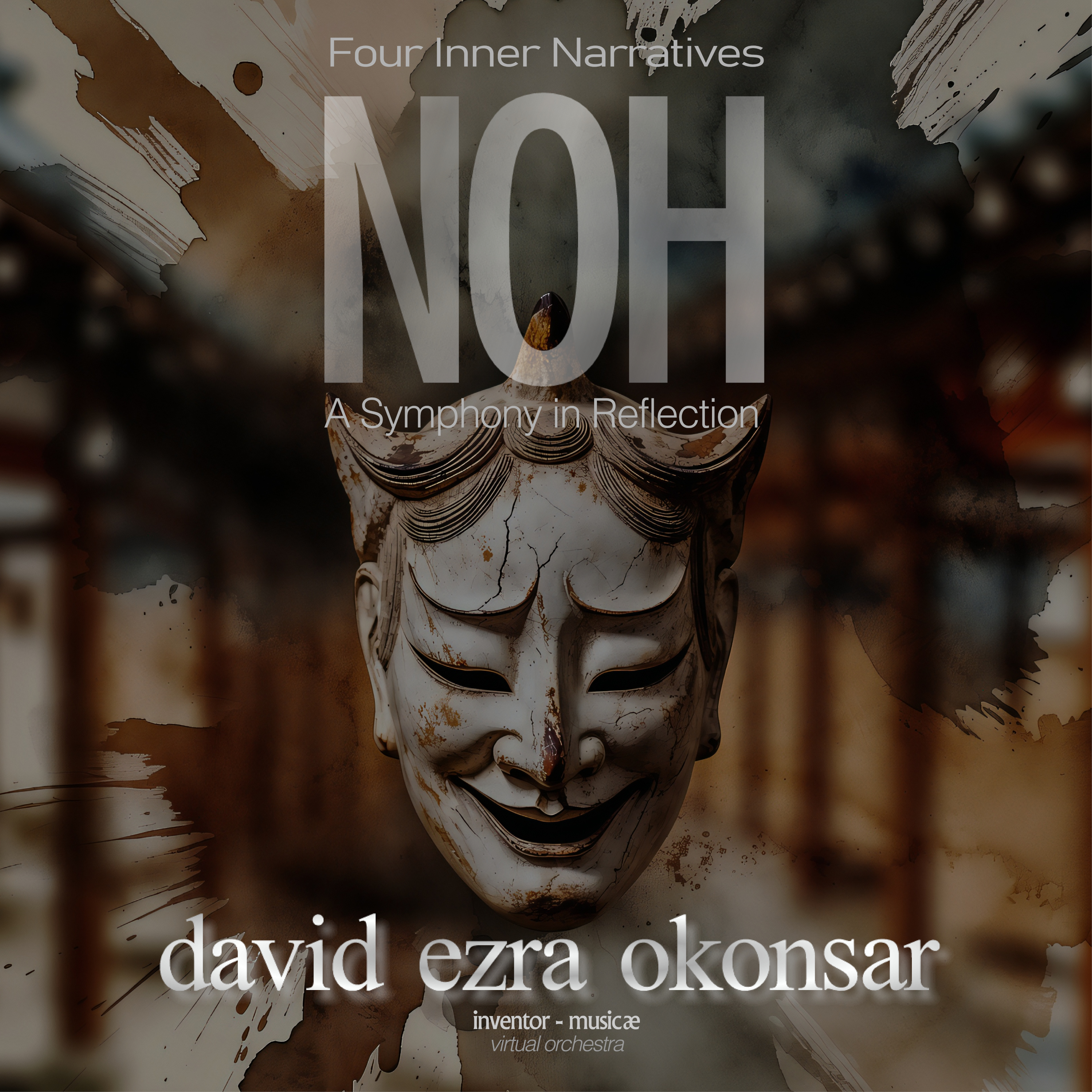
NOH — A Symphony in Reflection NOH is a four-movement symphonic work inspired by the poetic and spiritual world of Japanese Noh theatre. Rather than attempting to reproduce Noh as a historical theatrical form, the symphony approaches it as a way of perceiving time, memory, absence, and transformation. Its four movements unfold as interconnected reflections in which landscapes, objects, and imagined presences gradually acquire the function of characters. The work begins on a desolate shore at twilight. In I. The Pine That Remembers, an ancient pine stands before the sea, exposed to wind, mist, and the continuous movement of the waves. The tree is both physical presence and witness: something that has remained while generations, voices, and human histories have disappeared. From this image emerges one of the central ideas of the symphony — that memory may persist not as narrative, but as resonance. Musical gestures appear, leave traces, return altered, or dissolve before they can fully establish themselves. In II. The Sleeper Beneath the Waves, the visible landscape begins to lose its certainty. The shore passes into a dreamlike realm of water and submerged memory, where the presence of a forgotten warrior seems to awaken beneath the sea. The distinction between dream and death, recollection and apparition, becomes increasingly unstable. The movement draws upon the characteristic Noh idea of a figure returning from another time because something remains unresolved. Yet the warrior is less a conventional protagonist than an echo: a consciousness briefly reconstructed through fragments of sound, memory, and imagined ritual. The third movement, The Mask Without a Face, leaves the sea behind. Deep inland, an abandoned mask carver’s workshop contains silent Noh masks intended for faces and souls that are no longer present. Here the symphony turns toward questions of identity and representation. A Noh mask is fixed and motionless, yet the smallest change of angle or light can transform its apparent expression. This paradox becomes a musical principle: limited materials acquire different meanings through context, perspective, orchestration, density, and resonance. The mask conceals a face, but it can also reveal something that an individual face cannot express. IV. The Bridge of Returning Light begins at dawn. The bridge is both a physical image and a threshold, recalling the hashigakari of the Noh stage — the passage through which a performer enters the dramatic space. In the symphony it becomes a place of return and transformation. Memories of earlier movements reappear without simply repeating themselves. Sea, landscape, presence, absence, and light are perceived from another distance, as though the preceding journey had altered the meaning of everything encountered along the way. Across its four movements, NOH follows no literal theatrical plot. Its dramaturgy is instead built from states of perception: remembering, dreaming, encountering, disappearing, and returning. The relationship between sound and silence is therefore fundamental. Silence is not merely the absence of musical activity; it is a space in which resonance continues, allowing what has just disappeared to remain perceptible. This conception also shapes the orchestral writing. Timbres may emerge from larger textures and recede into them; sustained resonances coexist with sharply defined gestures; instrumental identities can momentarily become ambiguous. Musical continuity is often created less through conventional thematic development than through transformation, recollection, and the persistence of sonic traces. Material heard in one context may return later with its function changed, much as an object encountered in a dream can acquire a different significance when remembered. The title A Symphony in Reflection refers to this double process. Reflection is contemplation, but also an image returned from a surface — recognizable yet altered, dependent upon distance, light, and point of view. The symphony inhabits this territory between the object and its reflection, the event and its memory, the living presence and the trace it leaves behind. NOH ultimately approaches the Japanese theatrical tradition not through imitation, but through resonance. The pine, the drowned warrior, the mask, and the bridge form a sequence of archetypal images through which the music considers what remains after presence has vanished. At the end, the bridge does not lead toward a definitive conclusion. It opens a passage. What has been remembered is allowed to recede, and what has disappeared continues, for a moment longer, to resonate. FR NOH — Une symphonie en réflexion NOH est une œuvre symphonique en quatre mouvements, inspirée par l’univers poétique et spirituel du théâtre Nô japonais. Plutôt que de chercher à reproduire le Nô comme forme théâtrale historique, la symphonie l’aborde comme une manière de percevoir le temps, la mémoire, l’absence et la transformation. Ses quatre mouvements se déploient comme autant de réflexions interconnectées, dans lesquelles paysages, objets et présences imaginaires acquièrent progressivement la fonction de personnages. L’œuvre s’ouvre sur un rivage désolé au crépuscule. Dans I. The Pine That Remembers, un pin ancestral se dresse face à la mer, exposé au vent, à la brume et au mouvement continu des vagues. L’arbre est à la fois présence physique et témoin : quelque chose qui demeure tandis que les générations, les voix et les histoires humaines ont disparu. De cette image naît l’une des idées centrales de la symphonie — la mémoire peut persister non comme récit, mais comme résonance. Les gestes musicaux apparaissent, laissent des traces, reviennent transformés ou se dissolvent avant même de pouvoir pleinement s’établir. Dans II. The Sleeper Beneath the Waves, le paysage visible commence à perdre sa certitude. Le rivage bascule vers un univers onirique d’eau et de mémoire submergée, où la présence d’un guerrier oublié semble s’éveiller sous la mer. La distinction entre rêve et mort, souvenir et apparition, devient progressivement instable. Le mouvement s’inspire d’une idée caractéristique du Nô : celle d’un être revenant d’un autre temps parce que quelque chose demeure irrésolu. Pourtant, le guerrier est moins un protagoniste conventionnel qu’un écho — une conscience momentanément reconstituée à travers des fragments de son, de mémoire et de rituel imaginé. Le troisième mouvement, The Mask Without a Face, abandonne la mer. Loin à l’intérieur des terres, l’atelier déserté d’un sculpteur de masques abrite des masques de Nô silencieux, destinés à des visages et à des âmes désormais absents. La symphonie se tourne ici vers les questions d’identité et de représentation. Un masque de Nô est fixe et immobile ; pourtant, la moindre modification de son inclinaison ou de la lumière peut en transformer l’expression apparente. Ce paradoxe devient un principe musical : des matériaux limités acquièrent des significations différentes selon le contexte, la perspective, l’orchestration, la densité et la résonance. Le masque dissimule un visage, mais il peut également révéler ce qu’un visage individuel ne saurait exprimer. IV. The Bridge of Returning Light commence à l’aube. Le pont est à la fois une image physique et un seuil, évoquant le hashigakari de la scène de Nô — cette passerelle par laquelle l’acteur pénètre dans l’espace dramatique. Dans la symphonie, il devient un lieu de retour et de transformation. Les souvenirs des mouvements précédents réapparaissent sans jamais se répéter à l’identique. La mer, le paysage, la présence, l’absence et la lumière sont désormais perçus à une autre distance, comme si le parcours précédent avait transformé la signification de tout ce qui avait été rencontré. À travers ses quatre mouvements, NOH ne suit aucune intrigue théâtrale littérale. Sa dramaturgie se construit plutôt à partir d’états de perception : se souvenir, rêver, rencontrer, disparaître et revenir. La relation entre le son et le silence y est donc fondamentale. Le silence n’est pas simplement l’absence d’activité musicale ; il constitue un espace dans lequel la résonance se prolonge, permettant à ce qui vient de disparaître de demeurer encore perceptible. Cette conception façonne également l’écriture orchestrale. Des timbres émergent de textures plus vastes avant de s’y résorber ; des résonances prolongées coexistent avec des gestes nettement dessinés ; les identités instrumentales peuvent momentanément devenir ambiguës. La continuité musicale se construit souvent moins par un développement thématique conventionnel que par la transformation, la réminiscence et la persistance de traces sonores. Un matériau entendu dans un contexte peut réapparaître plus tard avec une fonction différente, comme un objet rencontré dans un rêve qui acquiert une autre signification lorsqu’il revient à la mémoire. Le sous-titre, A Symphony in Reflection — Une symphonie en réflexion — renvoie à ce double processus. La réflexion est contemplation, mais elle est également l’image renvoyée par une surface : reconnaissable et pourtant transformée, dépendante de la distance, de la lumière et du point de vue. La symphonie habite précisément ce territoire entre l’objet et son reflet, l’événement et son souvenir, la présence vivante et la trace qu’elle laisse derrière elle. NOH aborde ainsi la tradition théâtrale japonaise non par l’imitation, mais par la résonance. Le pin, le guerrier englouti, le masque et le pont forment une succession d’images archétypales à travers lesquelles la musique interroge ce qui demeure lorsque la présence s’est effacée. À la fin, le pont ne conduit pas vers une conclusion définitive. Il ouvre un passage. Ce qui a été remémoré peut alors s’éloigner, tandis que ce qui a disparu continue, encore un instant, de résonner. TR NOH — Yansımalar İçinde Bir Senfoni NOH, Japon Nô tiyatrosunun şiirsel ve ruhani dünyasından esinlenen dört bölümlü bir senfonik eserdir. Senfoni, Nô’yu tarihsel bir tiyatro biçimi olarak yeniden üretmeye çalışmak yerine, onu zamanı, belleği, yokluğu ve dönüşümü algılamanın bir yolu olarak ele alır. Dört bölüm, manzaraların, nesnelerin ve hayali varlıkların giderek birer karakter işlevi kazandığı, birbiriyle bağlantılı yansımalar halinde gelişir. Eser, alacakaranlıkta ıssız bir kıyıda başlar. I. The Pine That Remembers bölümünde kadim bir çam ağacı denizin karşısında, rüzgârın, sisin ve dalgaların kesintisiz hareketinin ortasında durur. Ağaç hem fiziksel bir varlık hem de bir tanıktır: kuşaklar, sesler ve insan hikâyeleri kaybolurken geride kalan bir şeydir. Senfoninin temel düşüncelerinden biri bu imgeden doğar — bellek, bir anlatı olarak değil, bir rezonans olarak varlığını sürdürebilir. Müzikal jestler belirir, izler bırakır, değişmiş biçimlerde geri döner ya da tam olarak yerleşemeden çözülüp kaybolur. II. The Sleeper Beneath the Waves bölümünde görünür manzara kesinliğini yitirmeye başlar. Kıyı, suyun ve suya gömülmüş belleğin düşsel dünyasına dönüşür; denizin altında unutulmuş bir savaşçının varlığı uyanıyor gibidir. Düş ile ölüm, hatıra ile hayaletimsi görünüş arasındaki sınırlar giderek belirsizleşir. Bölüm, Nô tiyatrosunun karakteristik düşüncelerinden birine dayanır: geçmişten gelen bir varlığın, çözümlenmemiş bir şey nedeniyle başka bir zamana geri dönmesi. Ancak savaşçı, geleneksel anlamda bir kahramandan çok bir yankıdır — ses, bellek ve hayali ritüel parçaları aracılığıyla kısa bir süre için yeniden biçimlenen bir bilinç. Üçüncü bölüm The Mask Without a Face, denizi geride bırakır. İç kesimlerde, terk edilmiş bir maske ustasının atölyesinde artık var olmayan yüzler ve ruhlar için yapılmış sessiz Nô maskeleri bulunmaktadır. Senfoni burada kimlik ve temsil kavramlarına yönelir. Bir Nô maskesi sabit ve hareketsizdir; buna rağmen, açısındaki ya da üzerine düşen ışıktaki en küçük değişiklik bile ifadesini dönüştürebilir. Bu paradoks müzikal bir ilkeye dönüşür: sınırlı malzemeler bağlam, perspektif, orkestrasyon, yoğunluk ve rezonans yoluyla farklı anlamlar kazanır. Maske bir yüzü gizler, fakat aynı zamanda tek bir insan yüzünün ifade edemeyeceği bir şeyi görünür kılabilir. IV. The Bridge of Returning Light şafakta başlar. Köprü hem fiziksel bir imge hem de bir eşiktir; Nô sahnesinde oyuncunun dramatik alana girdiği hashigakari adı verilen geçidi çağrıştırır. Senfonide ise bir geri dönüş ve dönüşüm mekânına dönüşür. Önceki bölümlerin anıları, kendilerini doğrudan tekrar etmeden yeniden belirir. Deniz, manzara, varlık, yokluk ve ışık artık farklı bir uzaklıktan algılanır; sanki önceki yolculuk, karşılaşılan her şeyin anlamını değiştirmiştir. NOH, dört bölümü boyunca gerçek anlamda teatral bir olay örgüsü izlemez. Dramaturjisi bunun yerine algı durumlarından oluşur: hatırlamak, düş görmek, karşılaşmak, kaybolmak ve geri dönmek. Bu nedenle ses ile sessizlik arasındaki ilişki eserin temel unsurlarından biridir. Sessizlik yalnızca müzikal etkinliğin yokluğu değildir; rezonansın devam ettiği, az önce kaybolmuş olanın bir süre daha algılanabilir kalmasını sağlayan bir alandır. Bu anlayış orkestral yazıyı da biçimlendirir. Tınılar daha geniş dokuların içinden ortaya çıkar ve yeniden onların içine çekilir; uzun süre devam eden rezonanslar keskin biçimde tanımlanmış jestlerle yan yana bulunur; çalgıların kimlikleri zaman zaman belirsizleşebilir. Müzikal süreklilik çoğu kez geleneksel tematik gelişmeden çok dönüşüm, anımsama ve işitsel izlerin kalıcılığı aracılığıyla kurulur. Bir bağlamda duyulan malzeme daha sonra farklı bir işlevle geri dönebilir; tıpkı bir düşte karşılaşılan nesnenin, hatırlandığında başka bir anlam kazanması gibi. Eserin alt başlığı A Symphony in Reflection — Yansımalar İçinde Bir Senfoni — bu ikili sürece gönderme yapar. “Reflection”, hem düşünsel içe dönüşü hem de bir yüzeyden geri yansıyan görüntüyü ifade eder: tanınabilir, ancak değişmiştir; uzaklığa, ışığa ve bakış açısına bağlıdır. Senfoni tam da nesne ile yansıması, olay ile hatırası, canlı varlık ile onun geride bıraktığı iz arasındaki bu bölgede var olur. NOH, Japon tiyatro geleneğine taklit yoluyla değil, rezonans aracılığıyla yaklaşır. Çam ağacı, sulara gömülmüş savaşçı, maske ve köprü; müziğin, bir varlık ortadan kaybolduktan sonra geriye ne kaldığını sorguladığı arketipsel imgeler dizisini oluşturur. Sonunda köprü kesin bir sonuca götürmez. Bir geçit açar. Hatırlanan şey uzaklaşmaya bırakılır; kaybolmuş olan ise bir an daha yankılanmaya devam eder. #DavidEzraOkonsar #NOH #ContemporaryClassical #ContemporaryMusic #SymphonicMusic #OrchestralMusic #ModernClassical #ModernSymphony #NohTheatre #JapaneseAesthetics #JapaneseCulture #NewMusic #ClassicalMusic #Symphony #Orchestra |
|||||||||||||||||||||||||
| Detailed Movements I. The Pine That Remembers On a desolate shore at twilight, an ancient pine stands before the sea. Memory seems embedded in its branches, carried by wind, mist, and distant waves. The movement unfolds as an act of listening, where landscape becomes remembrance and the boundary between the present and what has vanished begins to dissolve. II. The Sleeper Beneath the Waves The familiar shore dissolves into dream and water. Beneath the waves, a forgotten presence stirs, suspended between sleep, death, and memory. Fragments of a warrior’s past emerge and recede as the sea becomes both a threshold and a repository for what time has submerged but cannot erase. III. The Mask Without a Face The sound of the sea disappears, and the journey moves deep inland to an abandoned mask carver’s workshop. Silent Noh masks preserve the traces of forgotten lives, while identity itself becomes uncertain. Face, mask, wood, and memory converge in a meditation on absence and the forms through which the unseen may briefly become present. IV. The Bridge of Returning Light At dawn, a bridge appears suspended between land and sea, presence and absence, memory and release. Elements encountered throughout the symphony return in transformed form, no longer as fragments of the past but as traces carried toward light. The journey closes not with resolution, but with passage: a quiet crossing into renewal. |
|||||||||||||||||||||||||
|
|||||||||||||||||||||||||