Downloads only. Physical CD not available.
|
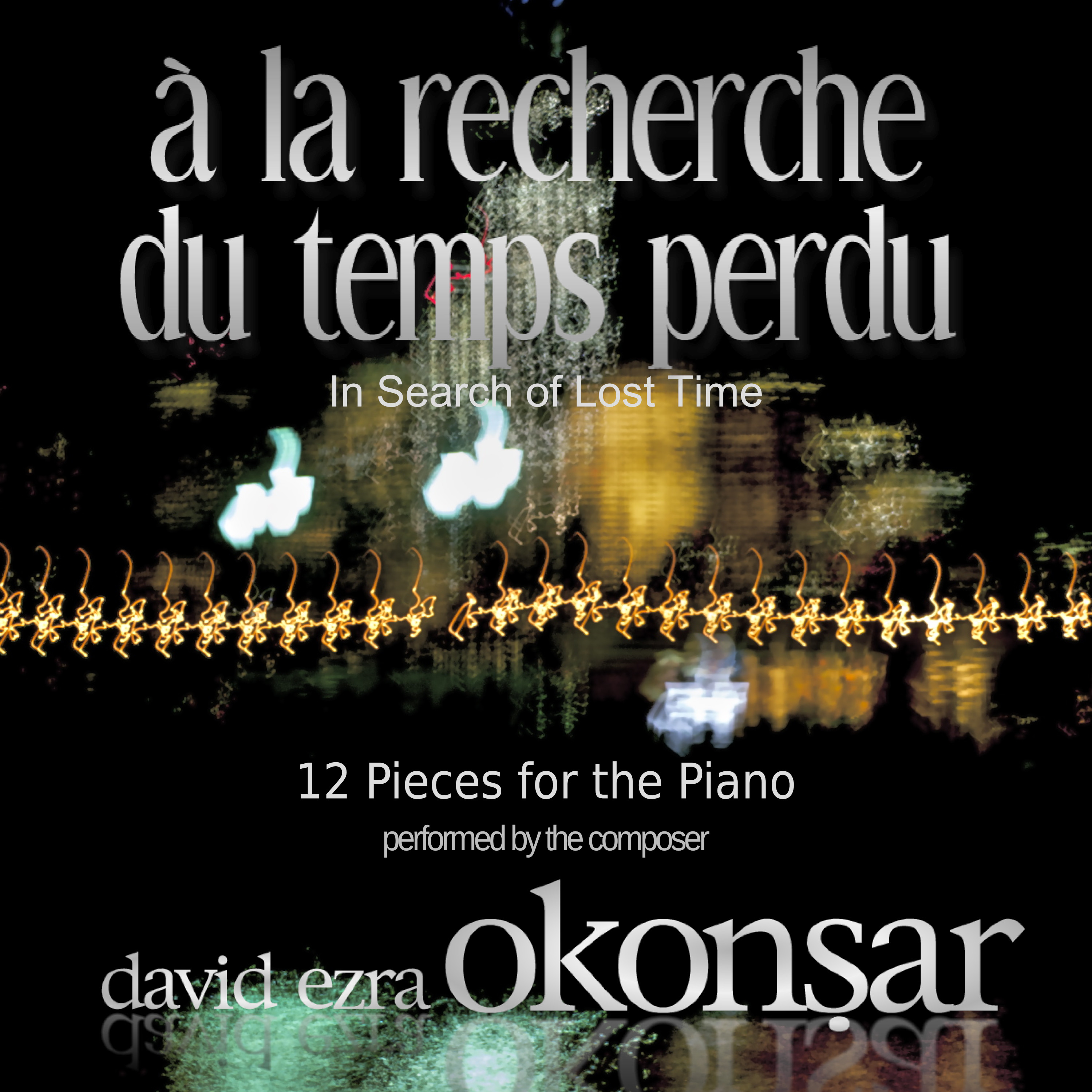
In Search of Lost Time is a seven-volume novel that explores memory, love, and the passage of time. The monumental work is considered one of the most outstanding literary achievements of the 20th century. Marcel Proust's narrative, in the composer's view, is very 'musical.' The prose flows in such a way that it is almost like a beautiful symphony, with its crescendos of emotion and delicate pauses that allow the reader to reflect. The series of piano pieces by David Ezra Okonsar with the same title captures this essence perfectly. The compositions reveal memories, perfumes, and tastes of different places and times in an intricate tapestry of emotions, from the bittersweet nostalgia of a lost love to the exhilarating joy of a new discovery, that transport the listener to another world. Listening to Okonsar's piano pieces feels like taking a journey through Proust's intricate narrative, each note painting a vivid picture of the past. The way in which the music weaves together various themes and emotions mirrors the complexity of Proust's writing, intriguing the audience and drawing them into the narrative. This intricate nature of the narrative makes the audience feel intrigued and eager to explore more. The emotional depth and richness of Okonsar's compositions create a sense of nostalgia and longing, much like the themes found in Proust's writing. The music evokes a sense of timelessness and universality that transcends language and culture, making it a truly captivating experience for anyone who listens. This captivating nature of the experience engages the audience in the narrative, making them feel engrossed and fully immersed in the music. -------------------------------------------------- FR À la recherche du temps perdu est un roman en sept volumes qui explore la mémoire, l'amour et le passage du temps. Cette œuvre monumentale est considérée comme l'une des réalisations littéraires les plus remarquables du XXe siècle. Le récit de Marcel Proust est, pour le compositeur, très « musical ». La prose coule de telle manière qu'elle ressemble presque à une belle symphonie, avec ses crescendos d'émotion et ses pauses délicates qui permettent au lecteur de réfléchir. La série de pièces pour piano de David Ezra Okonsar portant le même titre capture parfaitement cette essence. Les compositions révèlent des souvenirs, des parfums et des goûts de différents lieux et époques dans une tapisserie complexe d'émotions, de la nostalgie douce-amère d'un amour perdu à la joie exaltante d'une nouvelle découverte, qui transporte l'auditeur dans un autre monde. Écouter les pièces pour piano d'Okonsar donne l'impression de faire un voyage à travers le récit complexe de Proust, chaque note peignant une image vivante du passé. La manière dont la musique tisse des thèmes et des émotions variés reflète la complexité de l'écriture de Proust, intriguant le public et l'entraînant dans le récit. Cette nature complexe du récit rend le public intrigué et désireux d'explorer davantage. La profondeur et la richesse émotionnelles des compositions d'Okonsar créent un sentiment de nostalgie et de nostalgie, tout comme les thèmes que l'on retrouve dans l'écriture de Proust. La musique évoque un sentiment d'intemporalité et d'universalité qui transcende la langue et la culture, ce qui en fait une expérience véritablement captivante pour quiconque l'écoute. Cette nature captivante de l'expérience engage le public dans le récit, lui donnant le sentiment d'être absorbé et complètement immergé dans la musique. -------------------------------------------------- TR Kayıp Zamanın Peşinde, hafızayı, aşkı ve zamanın geçişini inceleyen yedi ciltlik bir romandır. Anıtsal eser, 20. yüzyılın en seçkin edebi başarılarından biri olarak kabul edilir. Marcel Proust'un anlatısı, besteciye göre, çok 'müzikal'dir. Nesir, neredeyse güzel bir senfoni gibi akar, duygunun doruk noktaları ve okuyucunun düşünmesine izin veren hassas duraklamalarla. David Ezra Okonsar'ın aynı adlı piyano parçaları serisi bu özü mükemmel bir şekilde yakalar. Besteler, kayıp bir aşkın acı tatlı nostaljisinden yeni bir keşfin heyecan verici sevincine kadar, dinleyiciyi başka bir dünyaya taşıyan karmaşık bir duygu dokusunda farklı yerlerin ve zamanların anılarını, kokularını ve tatlarını ortaya çıkarır. Okonsar'ın piyano parçalarını dinlemek, Proust'un karmaşık anlatısında bir yolculuğa çıkmak gibi hissettirir, her nota geçmişin canlı bir resmini çizer. Müziğin çeşitli temaları ve duyguları bir araya getirme biçimi, Proust'un yazısının karmaşıklığını yansıtır, izleyiciyi meraklandırır ve onları anlatının içine çeker. Anlatının bu karmaşık doğası, izleyicinin meraklanmasını ve daha fazlasını keşfetmeye istekli olmasını sağlar. Okonsar'ın bestelerinin duygusal derinliği ve zenginliği, Proust'un yazılarında bulunan temalara çok benzeyen bir nostalji ve özlem duygusu yaratır. Müzik, dil ve kültürü aşan bir zamansızlık ve evrensellik duygusu uyandırır ve onu dinleyen herkes için gerçekten büyüleyici bir deneyim haline getirir. Deneyimin bu büyüleyici doğası, izleyiciyi anlatıya dahil eder, kendilerini büyülenmiş ve müziğe tamamen dalmış hissetmelerini sağlar. |
|||||||||||||||||||||||||
| |
|||||||||||||||||||||||||
|
|||||||||||||||||||||||||